
The sleep advice keeping you awake at night: Lessons for leaders from our podcast with Stephanie Romeszewski
In the latest episode of The People Performance Podcast, our founder and CEO, Martin Johnson, spoke with Stephanie Romeszewski, sleep psychologist, entrepreneur, and founder of Sleepyhead Clinic, about why our collective obsession with sleep might be making us worse at it. With nearly two decades of clinical experience treating everyone from Premier League footballers to CEOs, Stephanie’s message is practical, evidence-based, and directly relevant to anyone leading at a high level.
The standard you’re measuring yourself against doesn’t exist
Eight hours, unbroken sleep, every night. Many leaders hold themselves to this standard relentlessly, and most feel like they’re failing. Stephanie’s first point cuts straight through it. “These eight hours don’t really come from research,” she explained. “Some guy during the Industrial Revolution was trying to figure out how to split the day. It was an industrial decision, not a biological one.”
When sleep psychologists run overnight studies, unbroken sleep is actually unusual. Mini-awakenings throughout the night are entirely normal, but people simply don’t notice them. Chasing perfect sleep isn’t realistic, and it’s not what healthy sleep looks like. And for leaders already running high cognitive loads, this false benchmark creates anxiety that compounds the very problem they’re trying to solve.
Your circadian rhythm doesn’t care about your diary
Circadian rhythms are the body’s 24-hour internal clock, governing not just sleep, but also mood, temperature regulation, appetite and cognitive function. Stephanie describes it simply: when your daily behaviours are predictable, the clock runs cleanly. When they’re not, everything downstream suffers.
Light exposure is the most powerful influence on your circadian rhythm, but eating patterns, exercise timing, and waking times all play a role too. For leaders with unpredictable schedules, back-to-back travel, or weekdays that look nothing like their weekends, the circadian clock is constantly being pulled in different directions. Stephanie believes those Sunday night blues many leaders experience is far more to do with a dysregulated sleep-wake cycle than the week ahead.
Stephanie’s prescription for a good sleep isn’t a rigid evening routine or an early bedtime, but a consistent wake time. Anchor your mornings and your body finds its own rhythm. It’s one of the few performance levers that costs nothing and requires no special conditions, just repetition.
Anxiety about sleep creates a sleep problem
High performers often respond to poor sleep the same way they respond to any challenge, by trying harder. Going to bed earlier, cutting social plans, and perfecting conditions. Stephanie sees this constantly in her clinic, and it invariably makes things worse.
The moment you start worrying about your sleep, cortisol spikes and melatonin retreats. You’ve physically pushed sleep further away.
The same discipline that makes leaders effective in the boardroom can actively undermine their sleep. Knowing when not to intervene, and when to stop optimising and simply let a natural process run, is a skill that applies to sleep as much as leading organisations and teams.
What leaders can take from this
Stephanie closes with something that reframes the whole sleep conversation: “You cannot lose the ability to sleep. The fear of that is reinforcing it far more than anything else”.
For leaders specifically, Stephanie advises:
Anchor your wake-up time. It’s the single most important lever you have, and it costs nothing.
Consistency beats perfection. A predictable routine, even an imperfect one, supports performance far better than chasing ideal conditions.
The harder you push, the further sleep retreats. Letting go of the need to control is the way forward.
Sleep changes across life stages.
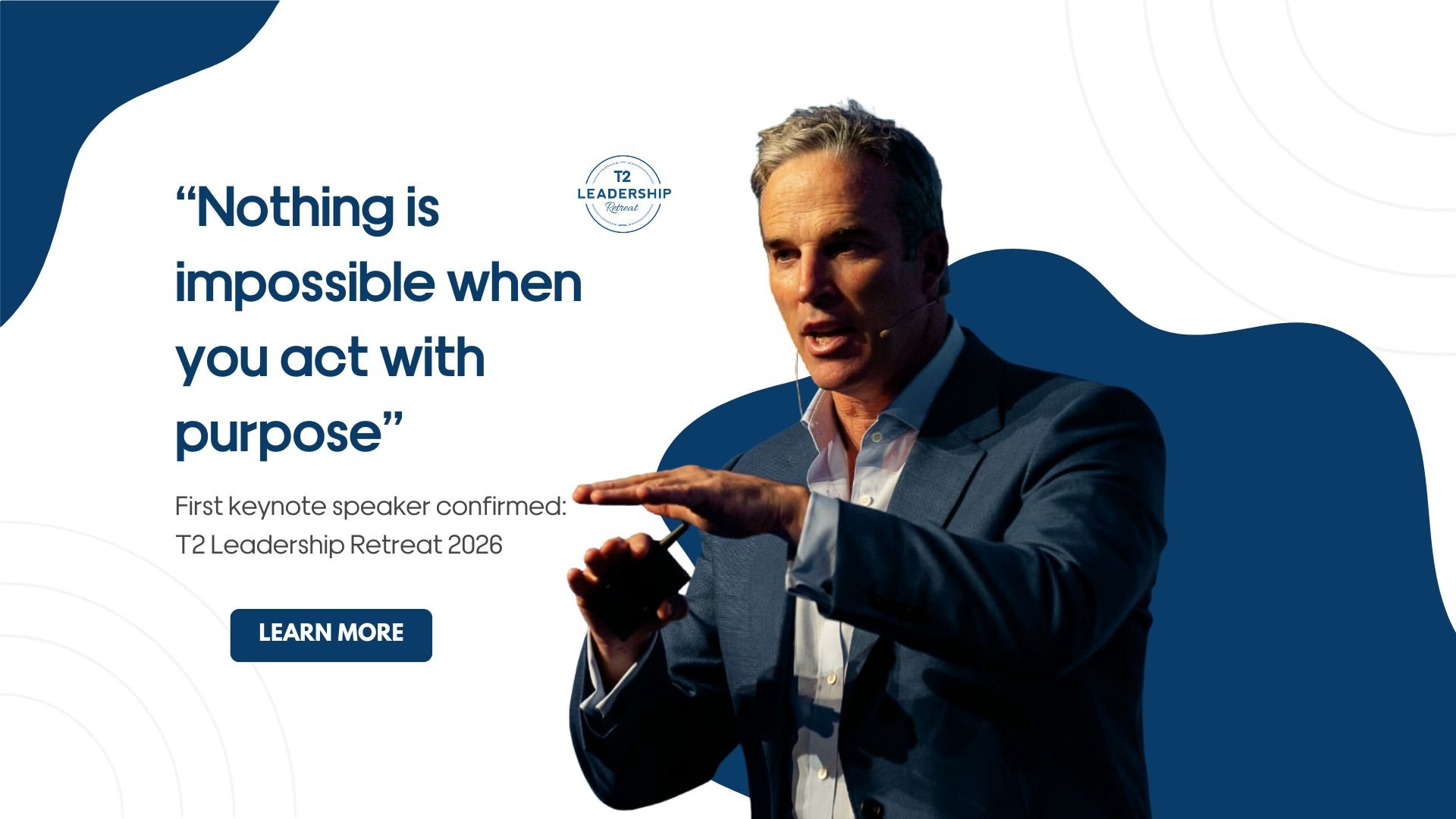
Stephanie Romeszewski will be joining us at the T2 Leadership Retreat Event this summer.