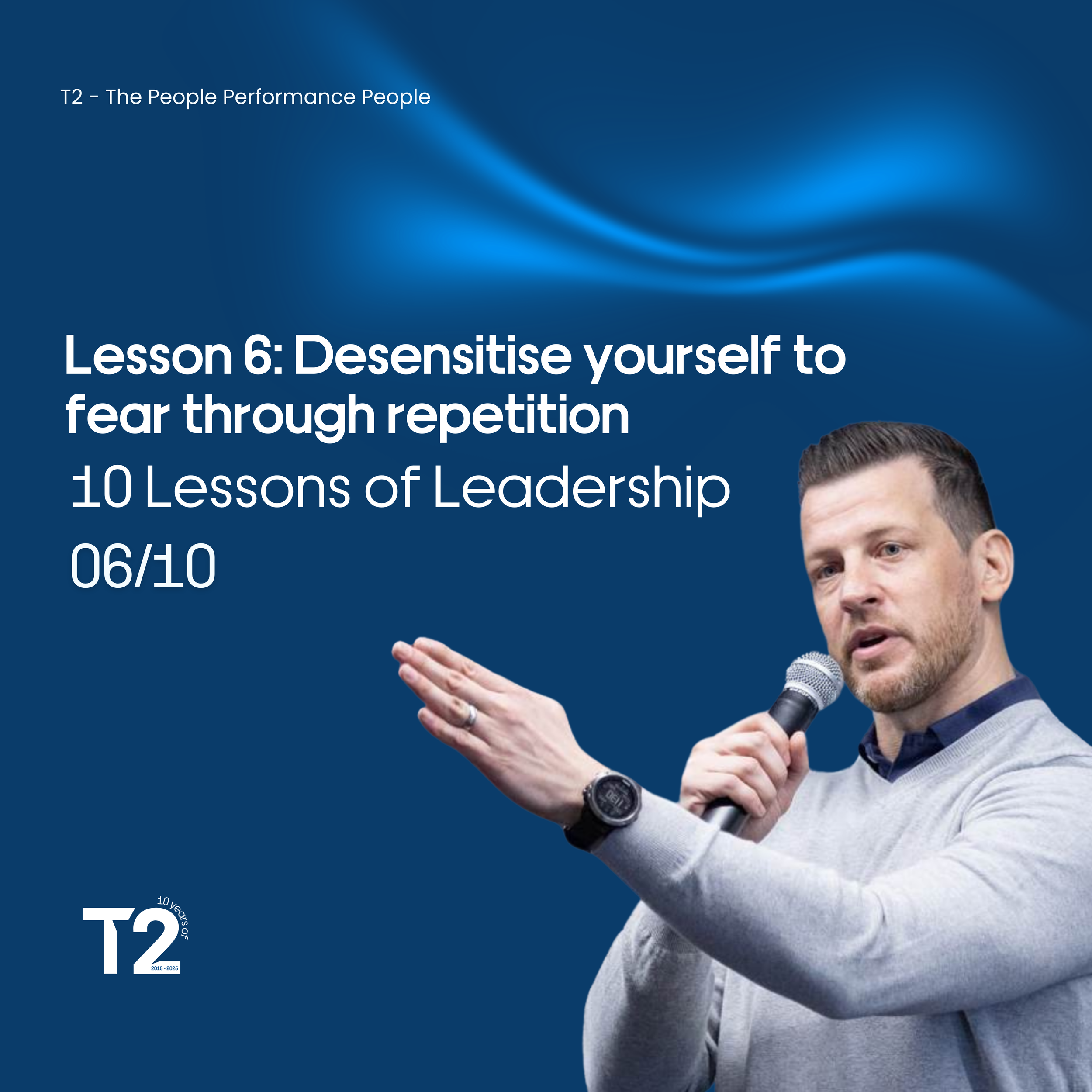

Lesson 8 by Martin Johnson - Learn from hierarchies and command structures
As leadership models have evolved, hierarchy has become a surprisingly polarising concept. Many organisations, eager to promote collaboration and empowerment, have flattened structures and decentralised authority, often with positive intent. Yet without clarity around roles, decision rights, and accountability, teams can drift into uncertainty, slowed execution, and diluted responsibility.
Lesson 8 explores a counterintuitive but critical leadership insight: hierarchy and humanity are not opposing forces. Drawing from lessons shaped by military environments and reinforced through high-performance team settings, this perspective highlights why clear structures, defined authority, and disciplined decision-making remain essential, particularly under pressure. When stakes are high, ambiguity can be more damaging than control.
In modern organisations, the challenge is not whether hierarchy should exist, but how it should function. Effective leaders create environments where accountability and empowerment coexist, enabling rapid decisions while preserving trust, inclusion, and psychological safety. This lesson examines how context-driven leadership, rather than rigid ideology, allows teams to combine clarity with collaboration and structure with adaptability.
Martin Johnson on Lesson 8: Learn from hierarchies and command structures
My experience in the military taught me many valuable lessons about organisational structure, discipline and decision-making processes. While modern leadership requires more humanity, there’s certainly still value in clear hierarchies and accountability structures.
The military’s approach to hierarchy serves specific purposes: it ensures rapid decision-making under pressure, maintains discipline and standards, and creates clear chains of accountability. These principles remain relevant in business contexts, even as leadership styles have evolved.
Modern leadership requires empathy and collaboration, but there are times when clear command structures are essential. During crisis situations, lengthy consultation processes can be counter-productive – someone needs to make decisions quickly and take responsibility.
Our work with elite sports teams reinforced these lessons. Successful teams have clear roles, responsibilities and decision-making authorities. Team members understand the chain of command, while still feeling valued and heard within that structure.
The key insight is that hierarchy and humanity aren’t mutually exclusive. Modern leaders can maintain clear organisational structures while still being empathetic and collaborative. It’s about choosing the appropriate leadership style for the context.
Many organisations have swung too far toward consensus-driven leadership, creating decision paralysis and accountability vacuums. Effective hierarchies actually enable empowerment by creating clear boundaries within which people can operate autonomously.
More About Martin Johnson
Martin Johnson is the founder and CEO of T2 The People Performance People, a consultancy at the forefront of leadership development, working with elite sports teams, global businesses, and public sector organisations. His journey from the Royal Navy to leadership consultancy has shaped a philosophy that blends performance psychology with real-world leadership practice.
Now celebrating its 10th year, T2 partners with organisations including INEOS Grenadiers, Manchester United, Specsavers, and Reckitt, helping leaders build confidence, collaboration, and capability that lasts.
This article is part of our 10 Lessons of Leadership series, celebrating 10 years of T2. Each month, we’ll share a new lesson from our CEO, Martin Johnson, designed to give leaders practical insights they can apply straight away.
Watch our journey. Be part of it!
Missed any of the previous lessons?