
Relationships, resilience and authentic leadership: Lessons from Neil Hudgell
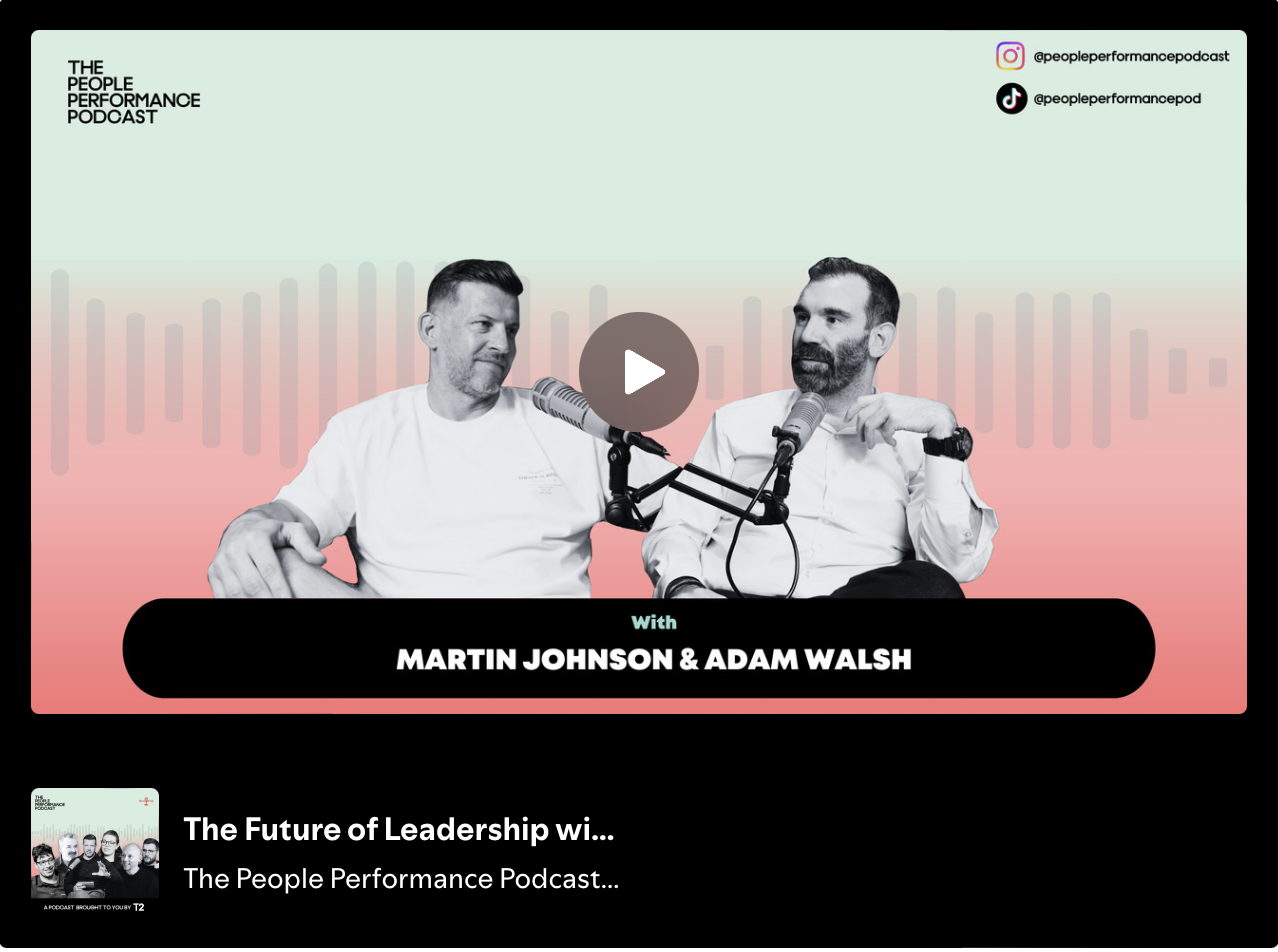
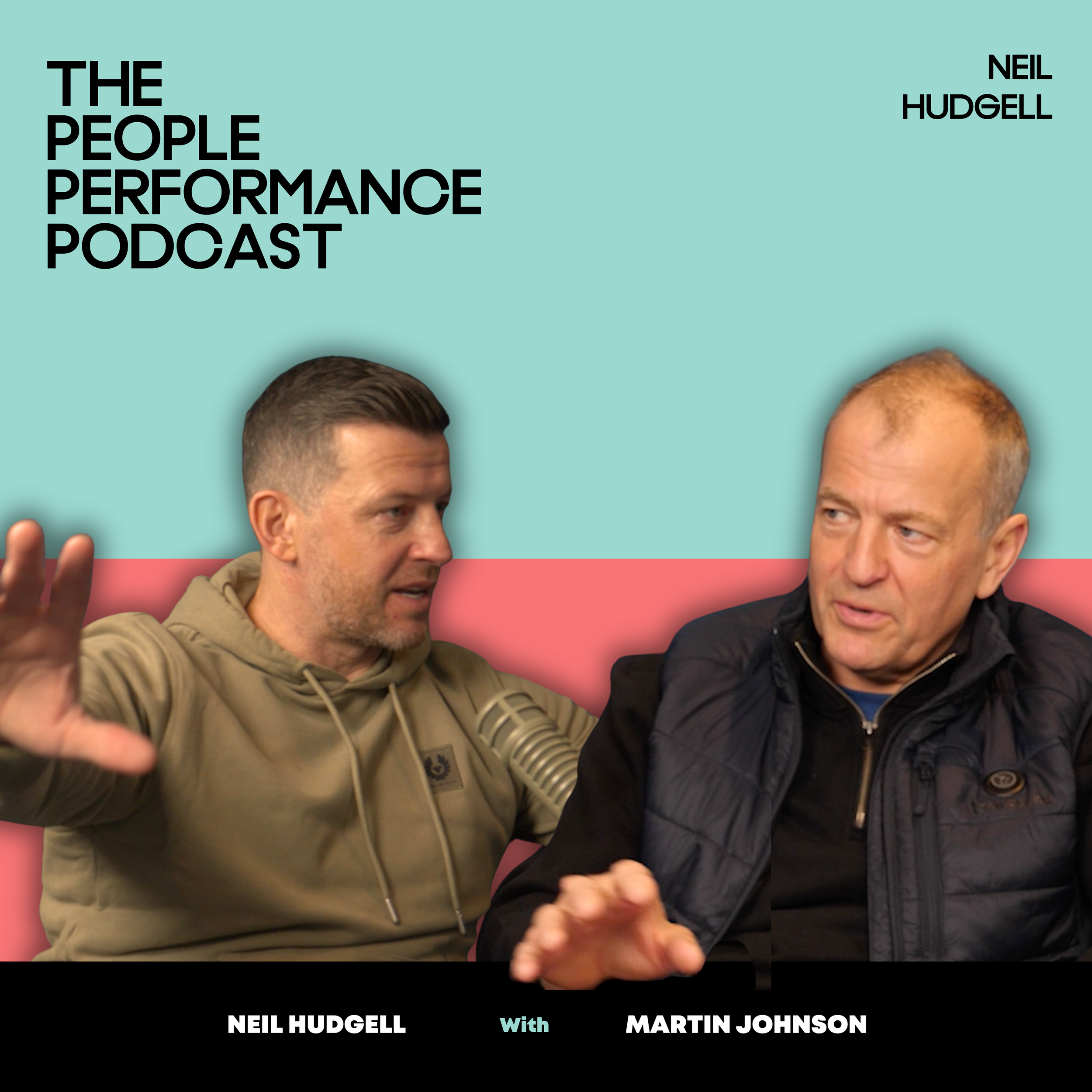
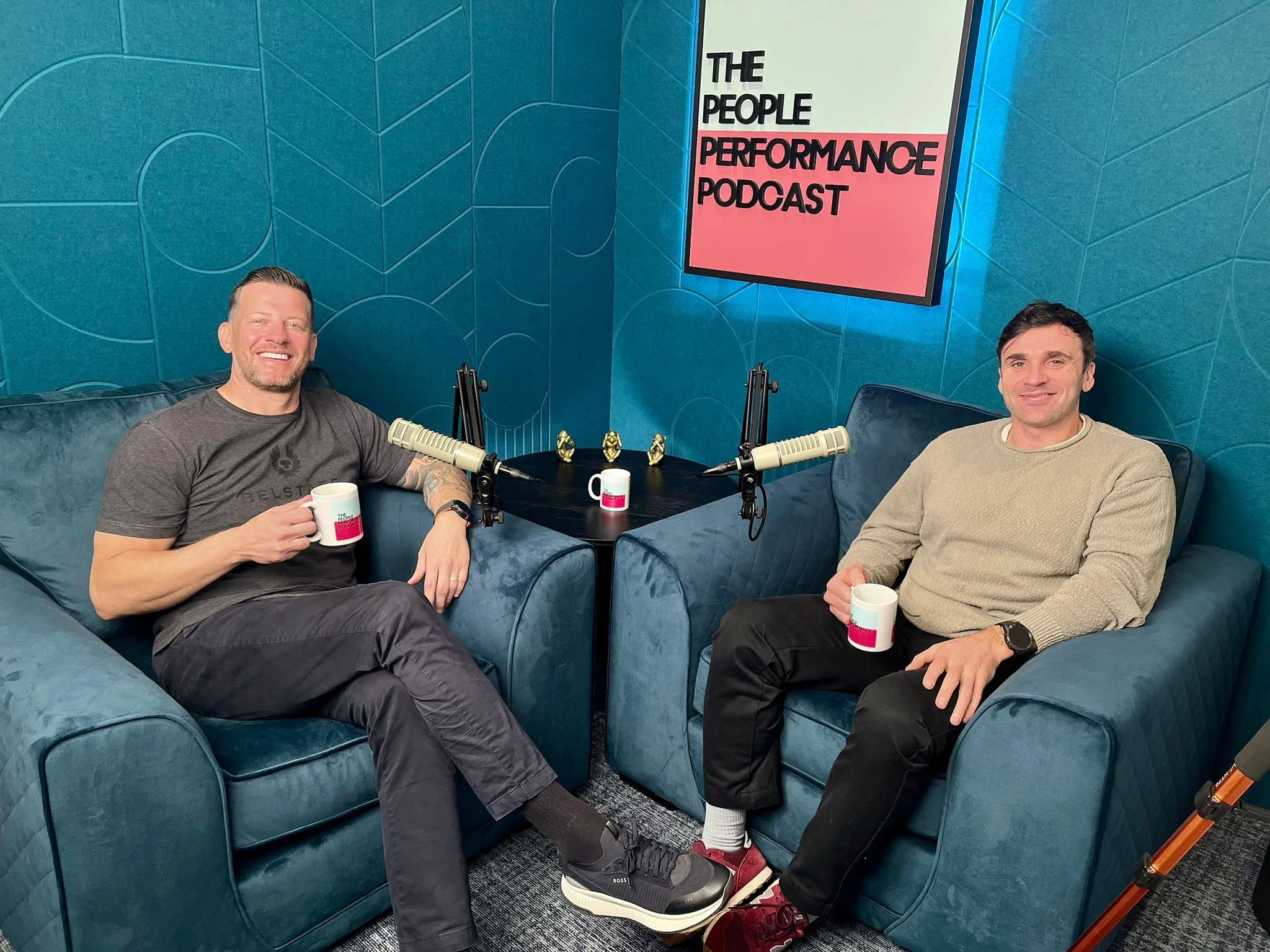
In the latest episode of The People Performance Podcast, our founder and CEO, Martin Johnson, sat down with Neil Hudgell, a solicitor who has represented victims of some of the UK’s most significant injustices, and the Chairman of Hull Kingston Rovers rugby league club, which achieved a historic treble in 2025. What emerged from their conversation were powerful insights about building trust through authenticity, the importance of surrounding yourself with complementary skills, and how belief grows incrementally through consistent progress.
Surround yourself with people who complement your weaknesses
Neil is refreshingly honest about his limitations. A self-described “easily distracted” student who struggled with attention to detail, he’s built Hudgell Solicitors into a highly successful law firm not by trying to fix these traits, but by embracing them and building teams around them.
“I’ve been a lawyer for the best part of 30 years and my ability to retain information and attention to detail never changed. It’s not great,” Neil admitted. “But one of the key things for me is that I surround myself with people that can do that.”
This self-awareness extends beyond acknowledging what he can’t do well. It also shapes how he leads. Neil recognises that his strength lies in big-picture thinking and relationships, not in knowing all the answers.
When Hull KR suffered relegation in 2016, Commercial Director Craig Franklin proposed a radical idea – discretionary pricing that would let supporters pay what they wanted. Neil’s initial reaction was scepticism, but rather than dismiss it, he gave Franklin the space to execute his vision.
The result was that lots of people decided to pay more, and the club subsequently did better financially in the lower division than they had in the elite Super League.
“I don’t always know right. I’m not always the right one,” Neil acknowledged. This is what we at T2 call dynamic subordination, which is the willingness to defer to someone with greater expertise, regardless of hierarchy. The most effective leaders aren’t those who try to be experts in everything. They’re the ones comfortable admitting what they don’t know and empowering others to fill those gaps.
Build relationships first, solve problems second
When asked how a solicitor from east Hull came to represent victims of the Post Office scandal, the Manchester Arena bombing, and the Grenfell Tower disaster, Neil’s answer was simple: relationships.
“Law is not difficult. There’s always somebody who’ll know the technicalities of some law better than I will,” Neil explained. “It’s about building relationships.”
Neil’s approach deliberately breaks from traditional legal conventions. He doesn’t wear pinstripe suits. He shows up in shorts and running shoes. He talks about football and the weather before getting into traumatic details.
“A suit and tie to people that are not used to our environment can be quite intimidating,” Neil observed. “Particularly when you’ve been let down by the institutions. You need to demystify that.”
Starting with one Post Office client, Jo Hamilton, Neil built trust. Jo introduced him to five more clients, who introduced ten more, eventually growing to over a thousand.
Leaders who prioritise genuine human connection over professional posturing build networks of trust that expand organically. As Neil’s experience shows, doing one thing exceptionally well for one person often matters more than doing many things adequately for many people.
Hold people accountable through a peer-led culture
When discussing Hull KR’s transformation from relegation to treble winners, Neil highlighted a critical element of high-performing cultures: peer accountability.
“Everybody is held to account by their peers,” Neil explained. “The coach can only do so much. The coach sets the standards, the captain buys into it, the senior players group buy into it, then everybody is held to account.”
Neil’s role in the dressing room was deliberately minimal. “We stand in a corner, and watch. Our voices aren’t there to be heard. We’re there to watch. We’re available, we’re there to support, but it’s quiet, discreet support.”
This approach creates what organisational psychologists call distributed leadership, where standards are maintained not through top-down enforcement but through cultural expectations embedded within the team itself.
For leaders building high-performing cultures, the lesson is clear: your job isn’t to police every behaviour or monitor every detail. It’s to set clear standards, empower the right people, and create conditions where team members hold each other accountable.
Build belief incrementally, not overnight.
Perhaps the most powerful insight from Neil’s journey with Hull KR was his framework for understanding belief and its impact on performance.
“At the start of Willie’s journey, I said to the group, ‘What this is about is belief,’ Neil recalled. “I would go to games hoping to win, but feeling at some point in those 80 minutes, the other team will pop over the top and beat us. My level of belief was at 2 out of 10.”
Neil tracked how belief grew incrementally through consistent progress:
· After winning the Challenge Cup Final in 2023 (Willie Peters’ first season as Head Coach): 5 out of 10.
· After reaching the Grand Final in 2024: 7 out of 10.
· After recruiting experienced winners and completing the treble in 2025: 9.5 out of 10
“You move from hoping to win to expecting to win,” Neil explained. “It’s that incremental journey, but it starts by getting the right people in with the right ethic.”
This framework challenges the popular notion that belief is something you simply decide to have. Instead, belief is earned through repeated experiences of success. It’s built through small wins that compound over time.
For leaders, this means recognising that cultural transformation and performance improvement rarely happen through dramatic interventions. Rather, they happen through consistent execution, incremental progress, and the accumulation of evidence that success is possible.
Focus on the process, and results will follow
Looking ahead to defending the treble, Neil’s approach reveals a critical mindset for sustained excellence.
“I don’t think you look at it as trophies. You look at it day by day, week by week, doing your best,” Neil said. “If you go through your processes, the rest takes care of itself. Trophies are just the reward for the work.”
Coach Willie Peters exemplified this. The morning after winning the Grand Final, he was already discussing how to improve. During a match where Hull KR were winning by over 50 points with minutes remaining, Willie went “ballistic” when a young player kicked ahead off-script.
This relentless focus on process over outcomes, on continuous improvement over celebrating achievement, separates organisations that sustain excellence from those that experience fleeting success.
Stay grounded in your principles
Throughout the conversation, one theme emerged repeatedly: Neil’s unwavering commitment to core principles.
“I don’t think you compromise your principles,” he said. “If you work hard and you’re honest, then for me, anything else is forgivable.”
This extends to mistakes. “We have a really open culture at Hudgells around mistakes. We all make mistakes every day. The difference is I’ve got the maturity and experience to know most mistakes can be remedied. If you dig a hole, stop digging.”
Neil’s formula is straightforward: work ethic, authenticity, integrity and truth. In an era where leadership advice often focuses on complex frameworks, his approach is refreshingly simple. Build genuine relationships. Surround yourself with complementary skills. Hold people accountable through culture. Build belief through incremental progress. Focus on process, not outcomes. Never compromise on core principles.
As Neil’s journey demonstrates, from a small solicitor’s office in east Hull to representing victims of national tragedies, and from potential relegation to a historic rugby league treble, these fundamentals, consistently applied over time, create extraordinary results.
You also might like…