
The Trust-Based Leadership Equation: How Great Leaders Build Trust Within Teams
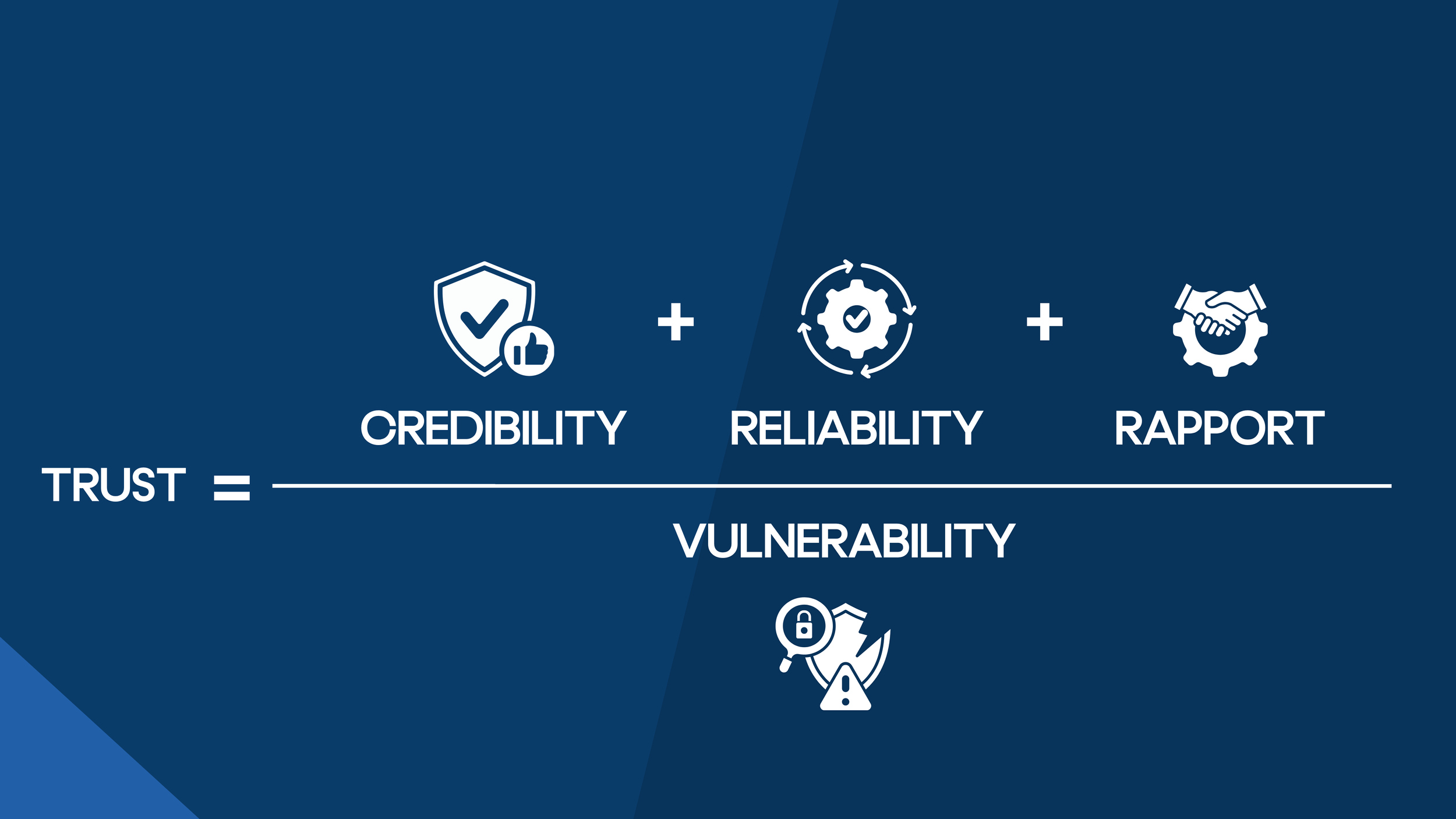
Trust-Based Equation
Trust sits at the foundation of every successful team. Without it, communication breaks down, collaboration suffers, and performance begins to decline.
In leadership, trust is not built through authority or job titles alone. It is developed through consistent behaviours, strong relationships, and the way leaders show up every day.
But what actually makes people trust a leader?
At T2, through our work with organisations and leadership teams, we’ve identified that trust is built on three key elements:
Credibility
Reliability
Rapport
When these three elements are present together, trust thrives. When one is missing, trust begins to weaken.
The Trust-Based Leadership Equation
1. Credibility
Credibility is about competence and expertise.
People need to believe their leader is capable, knowledgeable, and able to guide the team effectively.
Leaders build credibility when they:
Demonstrate expertise
Make informed decisions
Communicate clearly
Show confidence under pressure
Without credibility, leaders may still be liked personally, but they often struggle to gain genuine trust professionally.
Employees may think: “I like them… but I’m not fully confident in their leadership.”
2. Reliability

Reliability is about consistency.
Do you follow through on your commitments?
Do you do what you say you’ll do?
Reliability is often the strongest driver of trust because consistency creates psychological safety within teams.
Leaders build reliability when they:
Deliver on promises
Maintain consistent standards
Communicate openly
Behave predictably under pressure
When reliability disappears, trust can quickly erode. And once trust is lost, rebuilding it can take significant time and effort.
3. Rapport
Rapport is the personal connection between leader and team member. It’s the feeling that:
“My leader understands me”
“I feel comfortable approaching them”
“I feel heard and supported”
Without rapport, leadership relationships can become purely transactional.

Employees may respect their leader’s ability and reliability, but still avoid difficult conversations, hesitate to share ideas, or feel psychologically unsafe within the team.
Strong rapport helps create:
Open communication
Honest feedback
Collaboration
Engagement
Trust within teams
Why Vulnerability Strengthens Trust
Beyond credibility, reliability, and rapport, there is another critical ingredient that deepens trust:
Vulnerability.
In leadership, vulnerability does not mean weakness. It means:
Admitting mistakes
Asking for help
Being authentic
Showing honesty and openness
When leaders demonstrate vulnerability appropriately, it creates stronger emotional connection and psychological safety within teams. Employees are far more likely to trust leaders who feel human, authentic, and genuine.
What Happens When Trust Is Missing?
When trust breaks down in organisations, the impact is significant.

Teams may experience:
Poor communication
Conflict avoidance
Artificial harmony
Reduced accountability
Lower engagement
Toxic workplace behaviours
Often, leaders avoid difficult conversations because they fear conflict or damaging relationships. But avoiding honest conversations can actually reduce trust further over time.
Healthy, high-performing teams are built on open, honest, and constructive communication.
Trust and Leadership Performance
Research consistently shows that teams with high trust:

Perform better
Collaborate more effectively
Communicate more openly
Adapt more quickly to change
Experience higher engagement and retention
Trust is not a “soft skill.” It is a performance driver.
The most effective leaders understand that leadership is not simply about delivering results. It is about creating an environment where people feel valued, supported, and able to perform at their best.
Leaders who demonstrate: credibility, reliability and rapport will build strong trust within their teams. And when vulnerability is added to the equation, that trust becomes deeper, stronger, and more resilient. In modern leadership, trust is not optional. It is essential for high performance, effective communication, and long-term team success.
Develop Your Leadership Skills with T2
At T2, our Leading the Team pillar helps leaders build the skills needed to create high-performing, psychologically safe, and trust-based teams.
Through leadership development programmes, workshops, and coaching, we support organisations in developing leaders who can:
Build trust
Improve communication
Lead difficult conversations
Strengthen team culture
Drive sustainable performance
To learn more about our Leading the Team solutions, get in touch with the T2 team today or click on the link below: