
The Five Dysfunctions of a Team: Why Even Talented Teams Struggle to Perform
Why do some teams consistently achieve outstanding results while others, despite having talented people, struggle to gain traction?
According to leadership expert Patrick Lencioni, the answer often isn't capability, experience, or strategy. Instead, it's the behaviours and dynamics within the team itself.
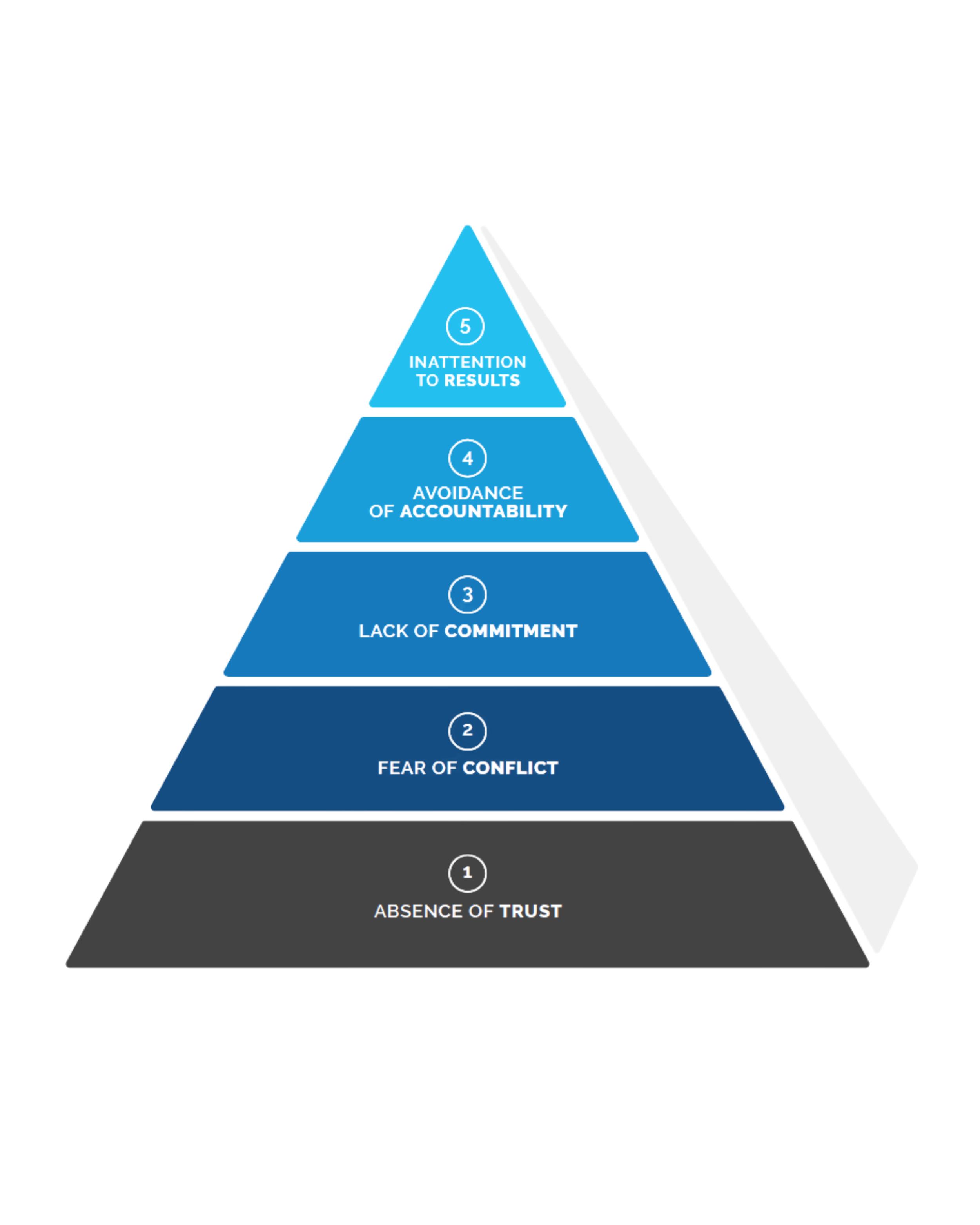
In his bestselling book, The Five Dysfunctions of a Team, Lencioni identifies five common challenges that prevent teams from reaching their full potential. Understanding these dysfunctions can help leaders create stronger relationships, improve collaboration, and build high-performing teams.
The 5 Dysfunctions of a Team - Patrick Lencioni
1. Absence of Trust
At the foundation of every successful team is trust.
Lencioni isn't talking about predictive trust - trusting someone to do their job. He's referring to vulnerability-based trust, where team members feel comfortable admitting mistakes, asking for help, and being open about challenges.
Without trust, people protect themselves rather than supporting one another, creating barriers to collaboration and honest communication.
2. Fear of Conflict
Many teams avoid conflict because they associate it with negativity.
However, healthy conflict is essential for effective decision-making. When trust is present, teams can challenge ideas, debate different perspectives, and have honest conversations without damaging relationships.
Without constructive conflict, teams often fall into artificial harmony, where people agree publicly but disagree privately.
3. Lack of Commitment
When teams avoid difficult discussions, they often struggle to gain genuine commitment.
People are more likely to support decisions when they've had the opportunity to contribute to the conversation, even if the final outcome isn't their preferred option.
Without commitment, ambiguity grows, priorities become unclear, and progress slows.
4. Avoidance of Accountability
High-performing teams hold one another accountable.
Rather than relying solely on managers to address issues, team members challenge behaviours, standards, and performance when required.
When accountability is missing, poor behaviours are tolerated, expectations become inconsistent, and performance can quickly decline.

5. Inattention to Results
At the top of the dysfunction model sits a focus on individual success over collective success.
This often occurs when leaders prioritise departmental goals, personal achievements, or individual recognition above team outcomes.
Lencioni refers to this challenge through the concept of the First Team. Leaders should view their peers on the leadership team as their primary team - not just the people who report to them.
When leaders put organisational success ahead of functional success, alignment improves, silos break down, and teams perform more effectively.
Why Does This Matter for Leaders?
The Five Dysfunctions of a Team isn't just a model for struggling teams. It's a framework that helps leaders understand what prevents teams from achieving sustained high performance.
Trust enables healthy conflict.
Healthy conflict creates commitment.
Commitment drives accountability.
Accountability leads to results.
When one layer is missing, the entire team feels the impact.
How do we at T2 Help Teams Perform?
At T2, we help leaders and teams understand and overcome the behaviours that limit performance.
Through our Leading the Team workshop, we support organisations in building trust, improving communication, strengthening accountability, and creating high-performing teams using proven frameworks such as Patrick Lencioni's The Five Dysfunctions of a Team.
If you're looking to improve team effectiveness and leadership alignment, we'd love to start a conversation.