
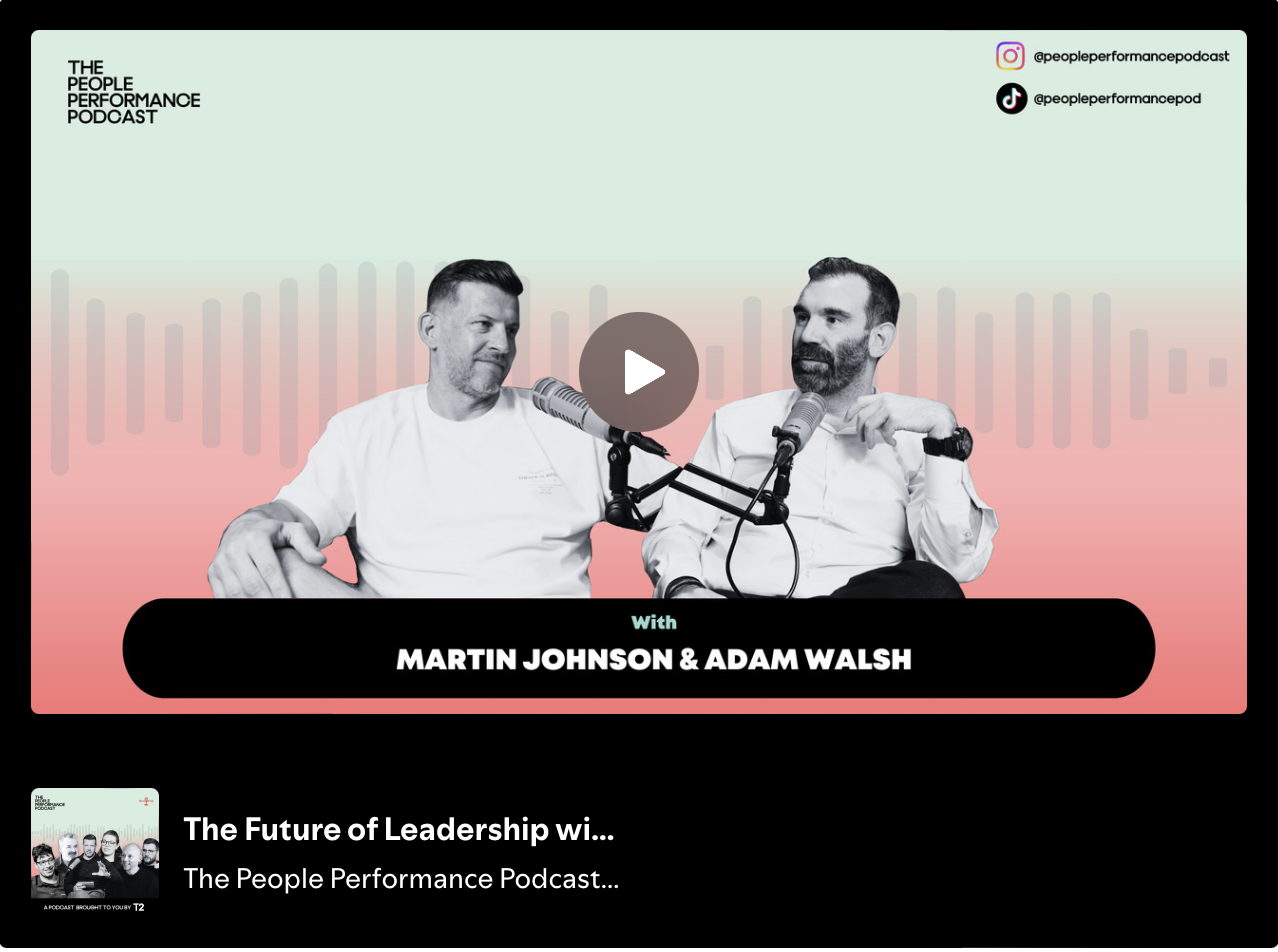
The Future of Leadership with Adam Walsh
AI is changing the way we work. But what does that mean for the future of leadership?
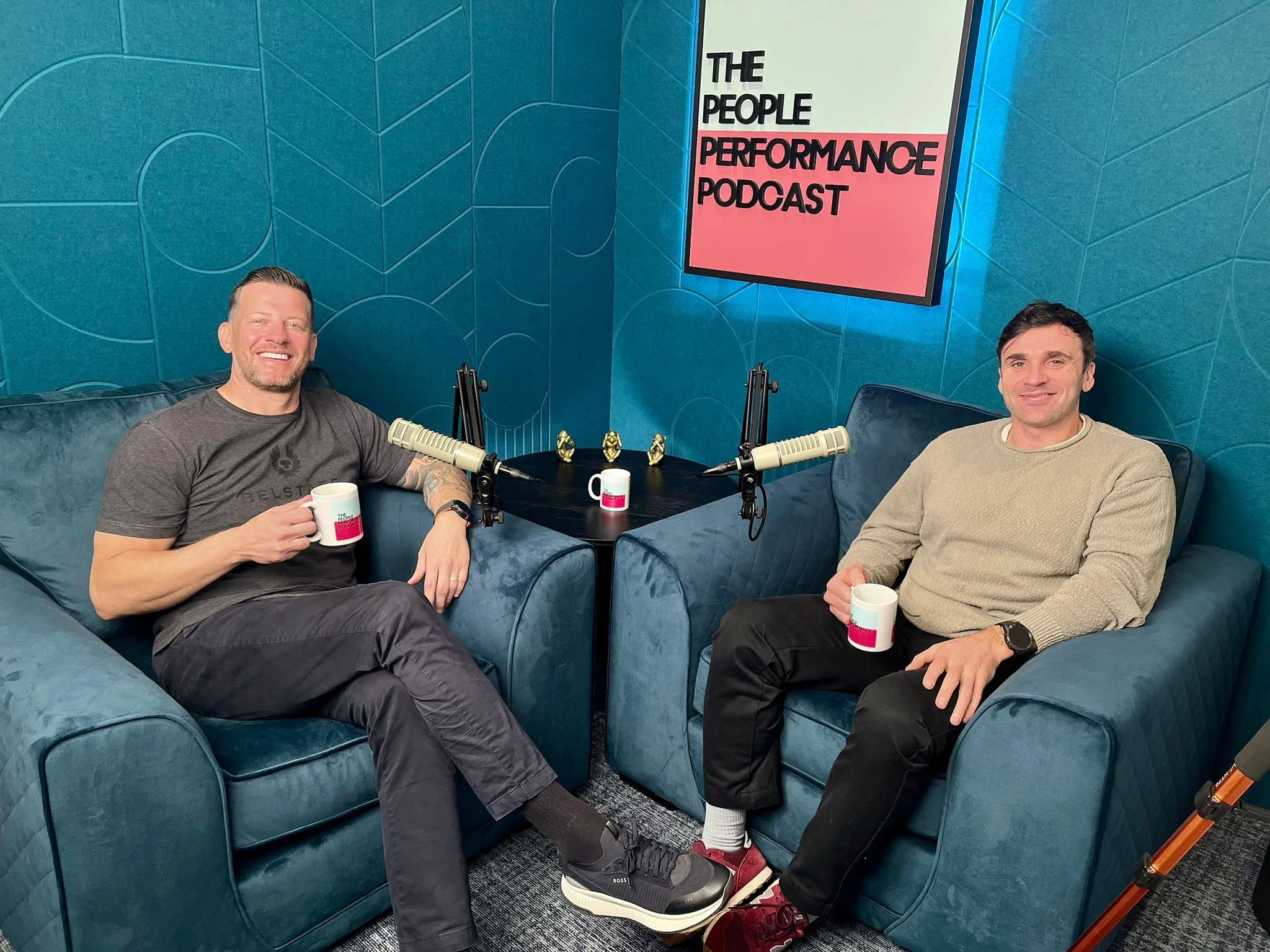
In the latest episode of the People Performance Podcast, Martin Johnson is joined by Adam Walsh, CEO of the John Good Group, to explore how AI, technology, and changing workplace expectations are reshaping leadership and the future of work. Their conversation ranges across AI, generations at work, and why leadership today isn’t about having all the answers. It’s about creating the environment where people can adapt, grow, and perform in an increasingly digital world.
If you’re a leader trying to make sense of AI without losing what makes your business distinctly yours, this one’s worth your time.
Leadership that gives credit away
Adam didn’t start out wanting to share the spotlight. Early in his career, he admits he wanted to be the one with the ideas, the one seen leading from the front. What changed everything was a coaching qualification that taught him to ask questions rather than hand out answers, and to help his team find their own solutions.
The shift, he says, wasn’t really about becoming selfless. It was realising that five people shining is brighter than one person shining alone, and that building a team where others get to develop, and get credit for it, works for everyone involved.
It’s a theme we talk about a lot at T2: leadership isn’t about being the smartest person in the room. It’s about creating the conditions for other people to do their best work.
The advice trap
One of the most useful moments in the episode is Adam’s take on his biggest leadership mistake: listening to too many people, too often.
His fix was simple but not easy. Narrow down to a small handful of people who are genuinely a few steps ahead of you on the path you’re trying to walk, and pay closer attention to what they do than what they say. Anyone can hand out advice. Far fewer people will still be there for you when things get difficult.
AI, automation, and the ice cream van problem
The conversation moves into AI with a story that’s stuck with us. Adam describes two ice cream sellers who both use AI to perfect their recipe. The result? Identical ice cream. The seller who keeps a grandmother’s recipe and adds something nobody else has is the one with a real edge.
It’s a useful way to think about where AI genuinely helps (speed, efficiency, getting good work done faster than ever before) and where it can quietly flatten what makes a business different. Adam’s view is that much of what gets called “AI” in business right now is really automation wearing a new label, and that distinction matters when you’re deciding where to invest.
He’s clear-eyed about the upside too. Tasks that used to take weeks and cost tens of thousands of pounds can now be done in hours. But he doesn’t believe AI replaces the parts of business built on empathy, context, and understanding a person’s situation. Not yet, and maybe not for a long while.

What changes when knowledge is no longer scarce
Perhaps the most thought-provoking part of the episode is the discussion of generational change. Martin shares research suggesting younger, fully digital-native generations are showing different patterns in problem-solving and memory, not because they’re less capable, but because their brains have adapted to a world where information is always a search away.
Adam’s response reframes the question well: if the tools available to people have genuinely changed, perhaps the skills worth measuring should change too. The conversation lands on a practical point for any leader managing a multi-generational team right now. The biggest near-term opportunity isn’t necessarily training the youngest, most digitally fluent employees. It’s helping the people in the middle, who carry real experience and judgement, get comfortable with the tools so that wisdom and capability meet.
Head, heart, and hands
Martin closes out the leadership discussion with a simple framework for what leadership demands today: head (self-awareness and clear communication), heart (genuine empathy, especially across generational lines), and hands (a willingness to get involved and show you can do the work yourself, not just talk about it).
In a world where anyone can be fact-checked in real time, leading on intellect alone isn’t enough. People are looking for leaders who are honest about their limits and visibly willing to do the work. As AI continues to evolve, the leaders who thrive won’t be the ones with every answer. They’ll be the ones who can balance innovation with a genuine focus on people.
Listen to the full episode
There’s a lot more in the full conversation, including Adam’s thoughts on loyalty versus impact, the leadership mistake he made early in his career, and who he considers the greatest leader he’s ever worked for.
Catch the full episode of the People Performance Podcast wherever you listen, and subscribe so you don’t miss what’s coming next.